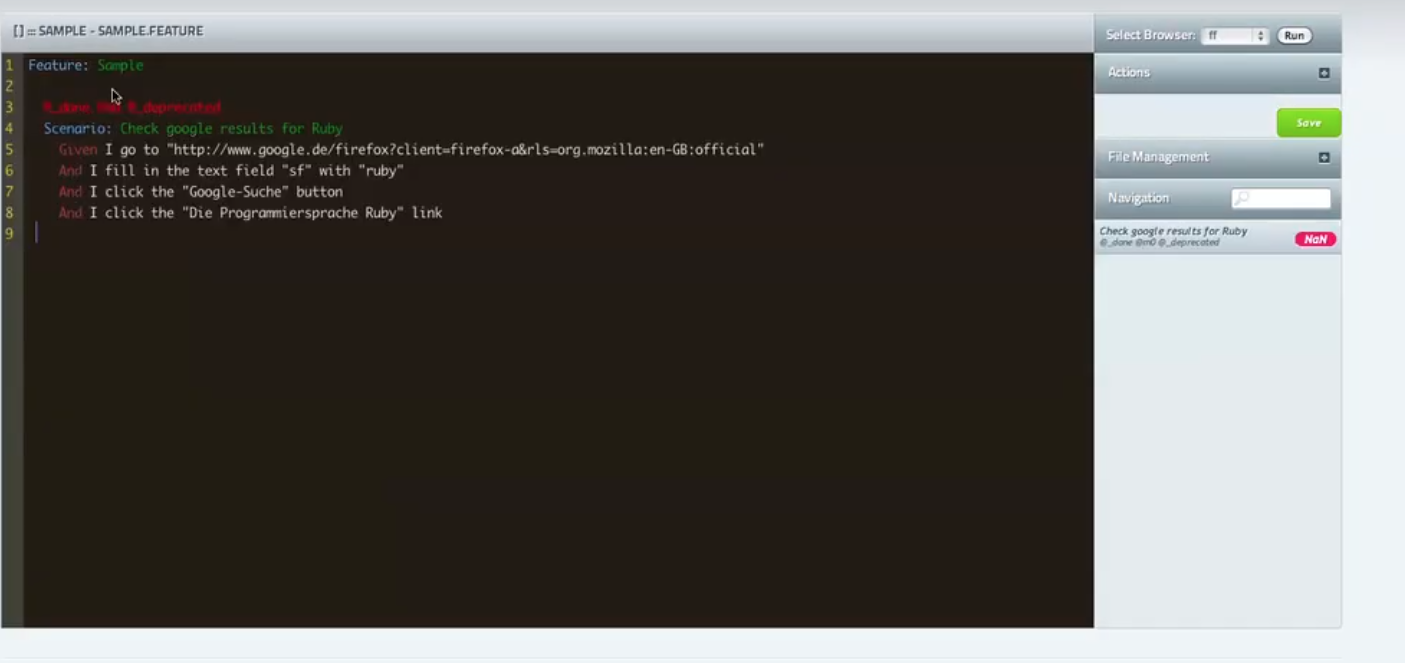
Around 16 years ago, I built a tool called WatirCukeFM during my time at Qype (now Yelp).
Recently I rediscovered an old video of it running. It's a reminder of an era when building better tooling meant writing it yourself.
The Problem
In 2009, test automation was a developer bottleneck:
- Browser testing ran locally via command line
- Test results were terminal output and log files
- QA teams depended on engineers to write and run tests
- No dashboards, no CI platforms, no test reporters
If you wanted to ship with confidence, you needed better visibility.
The Solution
WatirCukeFM was a Ruby on Rails application that made testing accessible to non-technical team members.
The key feature: QA could record test scenarios by simply clicking through the website. No coding required.
Those recorded scenarios became our deployment gate:
- Every core part of Qype had automated test coverage
- Before each production release, we ran the full suite
- Green? Ship it.
- Red? Fix it first.
The tool handled:
- Test execution from a web UI
- Real browser automation (Watir + Cucumber)
- Screenshots on failures
- Run history and statistics
- Team-wide visibility
Why It Mattered
This transformed how we shipped software:
- QA independence - Non-technical team members created and maintained tests
- Shared visibility - Everyone saw what was green before deployment
- Faster feedback - No waiting for engineers to run test suites
- Better confidence - Automated sanity checks on every release
It wasn't about the technology. It was about removing friction and empowering the team.
Looking Back
In 2009, there were no off-the-shelf solutions. Integrating Rails, Cucumber, and Watir meant orchestrating long-running processes, managing browser state, and designing UIs for things that previously had none.
It was plain Ruby, Rails conventions, and glue code. No AI. No generators. No hosted services.
Just the need to make things work better for the team—and the willingness to build it.
Times were different. Less productive, perhaps. But hell of fun.
🎥 Demo video: https://youtu.be/F5Ttn8fOca0
💻 GitHub: https://github.com/gs/watircukefm
Have fun and keep building.
— Grzegorz